Research after B.E. is a real option for Indian engineering graduates, but the routes are confusing: GATE, M.Tech, M.Tech (Research) or M.Sc (Engg) by research, direct PhD, fellowships, PGCET. This guide sets out each pathway, what it costs in time, how it is funded and who it suits, using current rules and the research structure that SJCE itself offered.
- GATE 2027 is organised by IIT Madras, with exams on 6, 7, 13, 14, 20 and 21 February 2027 across 30 papers, including a new Robotics and Automation paper. Scores stay valid for three years.
- M.Tech funding: AICTE’s PG scholarship for GATE-qualified students in AICTE-approved programmes has been ₹12,400 a month for up to 24 months. Check the current scheme notice.
- Research master’s: IISc relabelled its M.Sc (Engg) degree as M.Tech (Research) in 2022. SJCE offered M.Sc (Engg) by research in all engineering departments.
- PhD straight after B.E.: UGC’s 2022 PhD regulations allow four-year graduates with at least 75% aggregate (or equivalent) to apply.
- PMRF fellowship pays ₹70,000 a month in years 1–2, ₹75,000 in year 3 and ₹80,000 in years 4–5, plus a research grant of ₹2 lakh a year, at participating institutions.
The main research pathways at a glance
| Pathway | Typical duration | Entry route | Funding | Best for |
|---|---|---|---|---|
| M.Tech / M.E. (coursework + project) | 2 years | GATE, or a state test such as Karnataka PGCET | AICTE PG scholarship for GATE-qualified students in eligible programmes; teaching assistantships at some institutes | Deeper specialisation, R&D jobs, a stepping stone to a PhD |
| M.Tech (Research) / M.Sc (Engg) by research | Usually 2–3 years | GATE or institute test plus interview | Institute or project fellowships | Testing whether research suits you, with a thesis at the end |
| Direct PhD after B.E. | Usually 5 years or more | GATE or NET, or the institute’s own entrance and interview | Institute fellowships, PMRF, project positions | Students sure about research with a strong academic record |
| PhD after M.Tech | Usually 3–5 years | Institute entrance or interview; some routes accept GATE or NET | Fellowships, project funding, sponsored seats | Faculty careers, industrial R&D leadership |
| Part-time PhD while working | Varies | University entrance plus employer NOC | Salary from employer | Faculty and industry professionals |
Durations are typical, not guaranteed. Each institution sets its own minimum and maximum periods.
GATE: the gateway exam explained
The Graduate Aptitude Test in Engineering (GATE) is run jointly by IISc and the IITs on behalf of the National Coordination Board, Ministry of Education. A different institute organises it each year. For GATE 2027, IIT Madras is the organising institute:
- Dates: 6, 7, 13, 14, 20 and 21 February 2027, two sessions a day. Results are scheduled for 19 March 2027.
- Papers: 30 computer-based papers. Robotics and Automation (RA) is new, and Textile Engineering has moved into the Engineering Sciences (XE) paper as a section.
- Syllabus: revised for the first time in five years, so download the new syllabus for your paper. Don’t rely on old coaching notes.
- Validity: a GATE score is valid for three years from the date results are announced.
Registration for GATE 2027 has closed. If you’re in your pre-final year now, plan for GATE 2028 and watch for the notification, usually released in the second half of the year.
A good GATE score is useful for:
- M.Tech admission at IITs, NITs, IISc and many state institutions;
- scholarships for postgraduate study, such as the AICTE PG scholarship;
- PhD admission at many institutes, sometimes with a shorter selection process;
- recruitment at several public sector undertakings that have shortlisted using GATE scores. Each PSU sets its own rules in its recruitment notice.
Preparation tip: GATE rewards fundamentals from your second and third years, such as engineering mathematics, core subjects and general aptitude, much more than last-minute cramming. Start revising the core subjects during your 5th semester and take full-length mock tests in the final months. If you want a structured plan, our GATE preparation starter kit is one option. Official syllabi and past papers on the GATE website are the essential free resource.
M.Tech routes in Karnataka
For students who want to stay in the state, the Karnataka Examination Authority (KEA) runs PGCET for admission to M.E./M.Tech, MBA and MCA. For 2026, the PGCET M.E./M.Tech test covered only a few streams (civil, computer science, mechanical and electrical), with MBA and MCA tests on a separate day. KEA’s guidance said candidates with a valid GATE score in engineering did not need to write PGCET to apply for M.E./M.Tech admission under VTU. Rules change each year, so check the current KEA notification.
SJCE’s own history shows how established these routes are. The 2014 archive lists M.Tech seats filled by the Government of Karnataka through KEA, a “GATE stipend online entry” notice for second-year GATE students, and a Quality Improvement Programme (QIP) M.Tech in software engineering for teachers. M.Tech programmes then included industrial electronics, industrial structures, network and internet engineering, environmental engineering, maintenance engineering, computer engineering, software engineering, biomedical signal processing and instrumentation, energy systems and management, polymer science and biotechnology. For today’s offerings, see the official JSS STU website and our postgraduate programmes page.
AICTE PG scholarship: GATE-qualified students admitted to full-time postgraduate programmes at AICTE-approved institutions have been eligible for ₹12,400 a month for up to 24 months, or until the course ends if that is sooner. Eligibility conditions apply, so read the current scheme document on the AICTE portal before you count on it.
Research master’s: M.Sc (Engg) and M.Tech (Research)
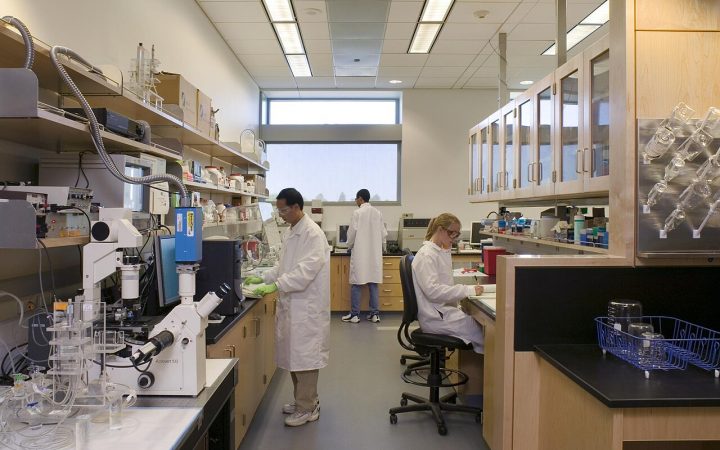
A research master’s is the least known route and often the most useful one. The degree is earned mainly through a thesis: you take a few courses, then spend most of your time on a supervised research problem. It suits graduates who want to test whether they enjoy research before committing to a five-year PhD.
- Naming: IISc relabelled its M.Sc (Engg) as M.Tech (Research) by a notification dated 2 March 2022, applied to students admitted from 2016. Other institutions use “MS by Research” or keep “M.Sc (Engg)”.
- At SJCE: the archived site lists “M.Sc. [Engg] by research – All Engineering Departments” and PhD programmes in all departments, plus sponsored research projects. Course-work examinations for PhD and M.Sc (Engg) by research candidates were notified alongside regular exams.
- JSS Research Foundation: set up by JSS Mahavidyapeetha in 2000-01 and affiliated to the University of Mysore from 2001-02. It offered PhD and M.Sc (Engg) by research degrees in areas such as computer science, electronic science, environmental science, polymer science, management studies and urban and rural planning.
A strong research master’s thesis, ideally with a publication, can be a better springboard to a funded PhD in India or abroad than a coursework M.Tech with a routine project.
Going straight to a PhD after B.E.
Indian rules now support moving directly from a four-year B.E./B.Tech to a PhD. The UGC (Minimum Standards and Procedures for Award of PhD Degree) Regulations, 2022 made graduates of four-year undergraduate programmes with at least 75% aggregate marks, or an equivalent grade, eligible for PhD admission. Below that, a one-year master’s after a four-year degree, with at least 55%, also qualifies. Universities may admit students through their own entrance test, and part-time PhDs are allowed for working professionals with an employer’s no-objection certificate.
Engineering institutes such as the IITs and IISc have long admitted strong B.Tech graduates to PhD programmes, usually after GATE screening or their own tests and interviews.
Prime Minister’s Research Fellowship (PMRF): India’s best-known doctoral fellowship. It pays ₹70,000 a month in the first two years, ₹75,000 in the third and ₹80,000 in the fourth and fifth, plus a research grant of ₹2 lakh a year for up to five years. It is open at participating institutions, including the IITs, IISc, IISERs and selected NITs and central universities, through direct entry (at the start of a PhD) and lateral entry (within the first two years of a PhD). Eligibility and seat availability change between cycles. The PMRF website currently notes that sanctioned seats are filled pending further approval, so check before you plan around it.
Choosing a supervisor and institute
Your supervisor matters more than the institute’s ranking. Before you accept an offer:
- Read the group’s recent papers. Check whether the work is active, published in reasonable venues, and close to what you want to do.
- Talk to current students. Ask how often they meet the supervisor, how long PhDs typically take in the group, and where graduates have gone.
- Check funding for all years. Find out whether the fellowship comes from the institute, a project with an end date, or a national scheme, and what happens if a project grant ends.
- Look at equipment and computing. Experimental work needs working labs. Computational work needs access to adequate computing resources.
- Understand the milestones. Course work, comprehensive exams, progress reviews and publication requirements before thesis submission.
Building a research profile during your B.E.
Admissions panels look for evidence that you can do research, not only good marks. Start early:
- Use research internships: AICTE’s internship policy counts research and project work at institutions as well as industry placements, and summers after the fourth and sixth semesters suit lab internships at IISc, IITs or national laboratories.
- Do a serious final-year project: choose a faculty member who publishes, aim for a conference paper, and write the report as a proper paper.
- Take online courses with exams: proctored courses in maths, programming or your core subject strengthen your fundamentals and show initiative.
- Learn scientific writing: literature review, referencing and LaTeX. Ask your project guide to review a draft paper, and use your college library’s writing and reference-management resources.
- Join professional societies: IEEE, ISTE and similar chapters run paper contests and talks. See our professional bodies page.
A suggested timeline from 3rd year to admission
| When | What to do |
|---|---|
| 5th semester | Pick a GATE paper. Start revising core subjects. Approach faculty about research projects. |
| Summer after 6th semester | Research internship at a lab or institute. Shortlist programmes and supervisors. |
| 7th semester (Aug–Oct) | Register for GATE. Take full-length mock tests. Start the final-year project with a publishable goal. |
| February | Write GATE. Keep up project work. |
| March–June | GATE results. Apply for M.Tech, research master’s and PhD programmes. Attend tests and interviews. Track PGCET if you’re considering Karnataka seats. |
| July–August | Accept an offer, complete scholarship or fellowship paperwork, and join. |
For the wider research context on campus, see our research page. If you’re still deciding between research and a job, our placement preparation roadmap shows how to keep both options open.
Frequently asked questions
Do I need GATE for an M.Tech in Karnataka?
Not always. KEA runs PGCET for M.E./M.Tech admissions, and for 2026 it said candidates with a valid GATE score did not need to write PGCET to apply under VTU. GATE is also needed for the AICTE PG scholarship. Check the current KEA notification.
How long is a GATE score valid?
Three years from the date the results are announced, according to the GATE 2027 organising institute. Individual institutes and PSUs may accept only recent scores, so check each notification.
Can I do a PhD directly after B.E.?
Yes. The UGC’s 2022 PhD regulations allow four-year undergraduate degree holders with at least 75% aggregate (or equivalent) to apply, and IITs and IISc admit strong B.Tech graduates to PhD programmes through their own processes.
What is the difference between M.Tech and M.Tech (Research)?
A regular M.Tech is mainly coursework with a project. An M.Tech (Research), called M.Sc (Engg) at many institutes in the past, is mainly a supervised thesis with a smaller set of courses, and it is a natural lead-in to a PhD.
How much is the PMRF fellowship?
₹70,000 a month in years 1–2, ₹75,000 in year 3 and ₹80,000 in years 4–5, plus a research grant of ₹2 lakh a year, according to the official PMRF website. Seat availability and eligibility change between cycles.
Is research a good choice compared with a campus placement?
It depends on your goals. Research suits people who enjoy open-ended problems and want careers in R&D, academia or deep-tech start-ups. A job gives earlier income and industry experience. Many people work for a few years and then return for a PhD or a part-time research degree.
Sources & further reading
- GATE 2027 official website (IIT Madras)
- IIT Madras press release: GATE 2027 dates, syllabus revision and new paper
- Prime Minister’s Research Fellowship (PMRF) official website
- IISc notification relabelling M.Sc (Engg) as M.Tech (Research), 2022
- ThePrint: UGC’s 2022 PhD regulations explained
- Careers360: Karnataka PGCET 2026 and GATE candidates
- Karnataka Examination Authority (KEA)
- AICTE Internship Policy (PDF), including research internships